The cart is empty
FREE SHIPPING IN ITALY for a purchase over €500, excluding islands, disadvantaged areas and ZTL (See Terms)



The position of the desk in the office is a fundamental aspect both for the well-being of those who work and for the overall efficiency of the workspace. The correct arrangement takes into account natural light, distance from other furniture, concentration needs, and safety regulations. A well-positioned desk not only improves posture and reduces eye strain, but also helps create a more productive and harmonious environment.
Let’s see how to optimize desk placement with practical tips and references to the main rules to follow.
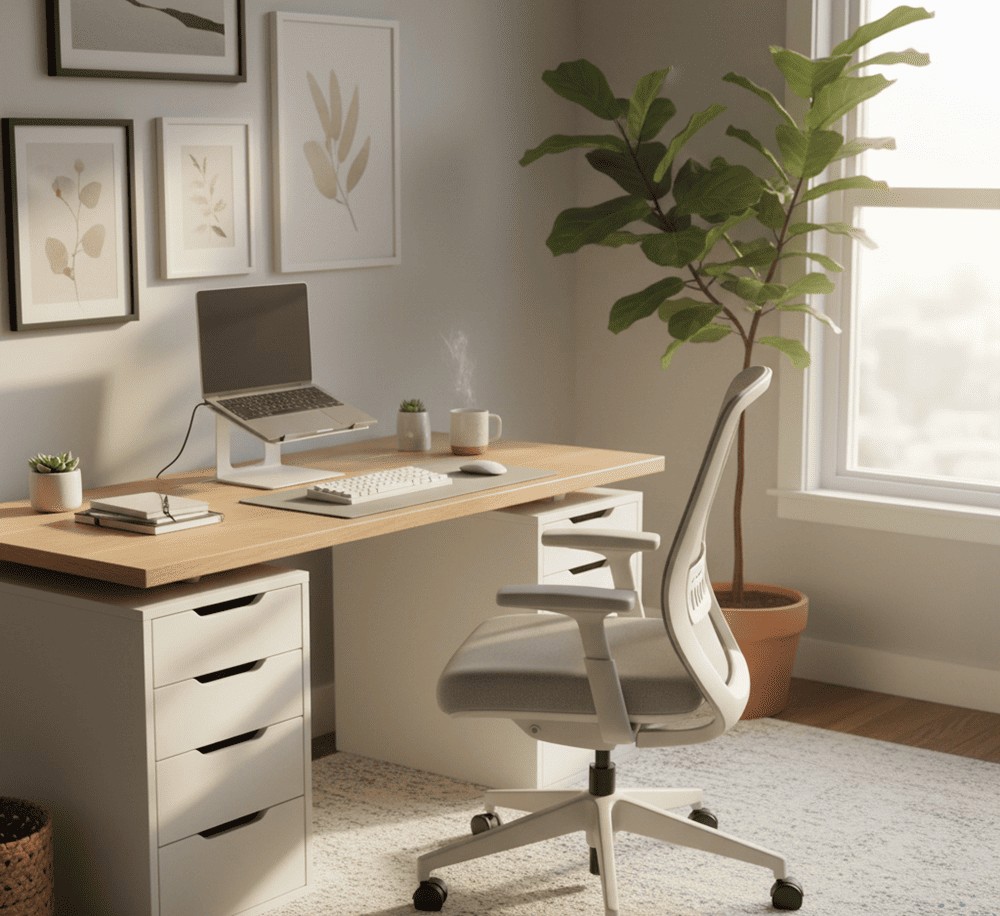
The position of the desk in relation to the window is crucial for making the most of natural light while avoiding glare and reflections. The ideal placement is to position the desk sideways to the window: this way, light illuminates the work surface without directly hitting the computer screen.
💡 Placing the desk directly in front of the window can cause excessive brightness, while having it behind you creates annoying reflections on the monitor. The lateral arrangement, on the other hand, offers a balance between visual comfort and natural brightness, helping reduce the use of artificial lighting and energy consumption.
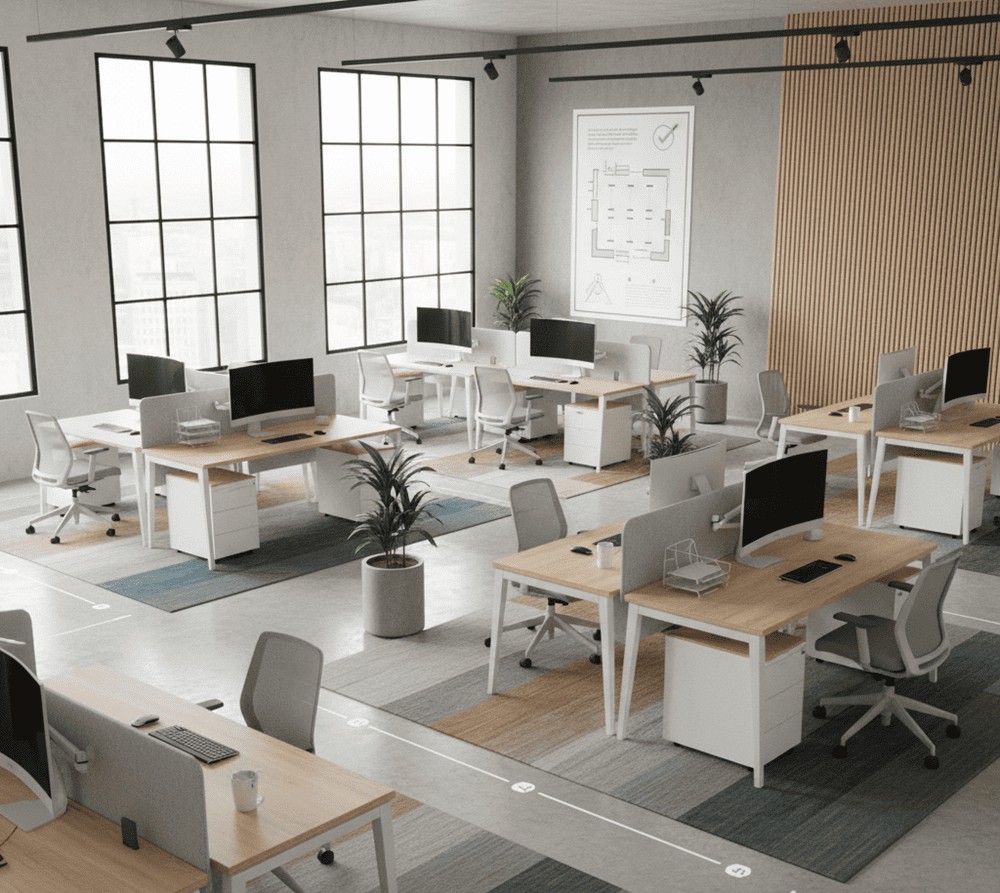
In open-plan offices or shared workstations, desk layout must balance ergonomics, privacy, and movement flow. Basic rules recommend leaving at least 80 cm between desks to ensure freedom of movement, and about 120 cm in main corridors.
🪑 Orientation should encourage collaboration without compromising concentration. Arranging desks “face to face” works well in team-working areas, while in spaces that require focus it is better to use side-by-side or staggered layouts. The use of dividers or sound-absorbing panels can also improve visual and acoustic comfort.
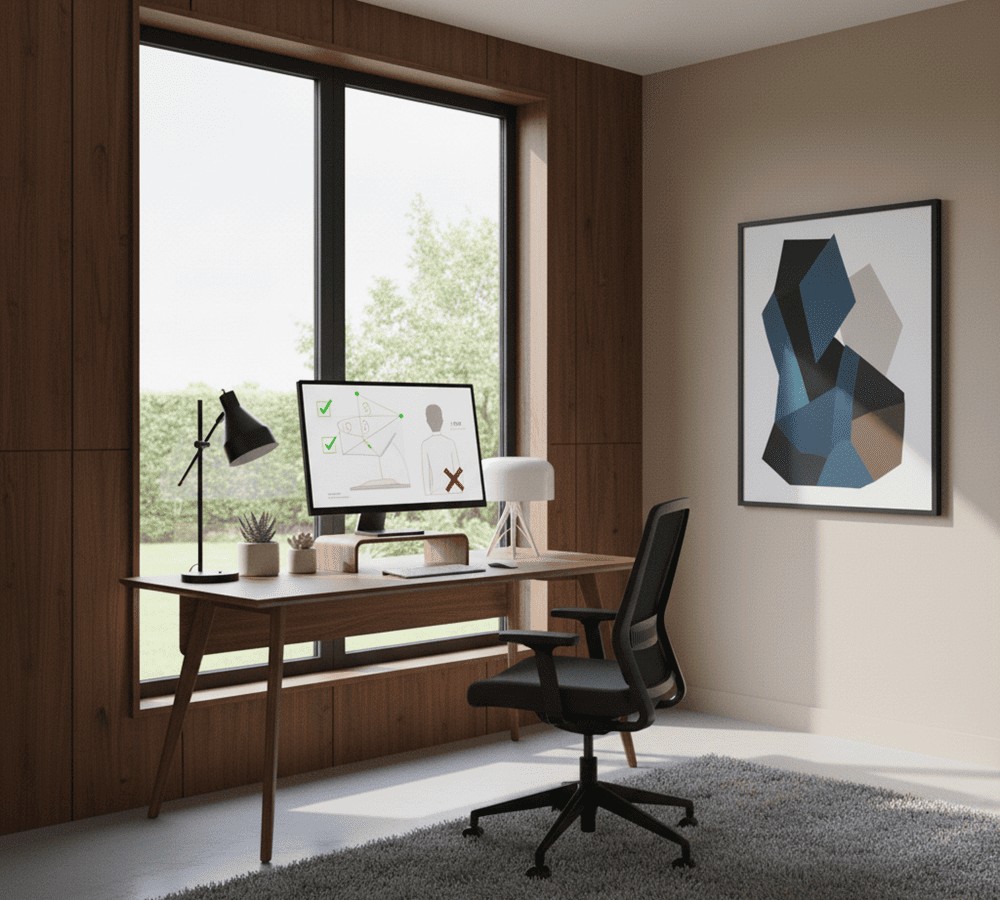
It’s not enough to choose the right desk placement: the positioning of the computer screen is also crucial to reduce eye strain. The screen should be placed about 50–70 cm from your eyes, with the top edge aligned with eye level or slightly below.
📐 In relation to the window, the screen should never be positioned directly in front of or behind it, to avoid glare and reflections. The use of adjustable blinds or solar shades can also help maintain consistent light quality. These measures allow you to work longer without eye fatigue and reduce the likelihood of headaches and drops in concentration.
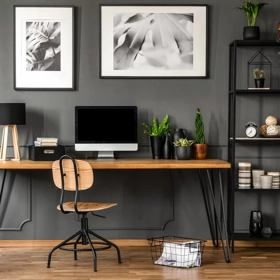
Often overlooked, the space between the desk and the wall affects the functionality of the workstation. It is advisable to leave at least 80–90 cm to allow you to stand up and move comfortably with your chair. For desks placed against a wall, it is useful to provide organized cable management and enough room for shelves or storage units nearby.
🔧 In small spaces, an effective solution can be the use of compact desks or height-adjustable models, which optimize space without compromising ergonomics.
The regulation on office desk layout is governed by Legislative Decree 81/2008 and the guidelines on workplace health and safety. In summary, every workstation must be organized to reduce the risk of musculoskeletal disorders, eye strain, and stress.
⚖️ Key requirements include: minimum spacing between desks to allow freedom of movement, adequate natural or artificial lighting, and adjustable desks and chairs to suit different body types. The law also emphasizes the importance of taking breaks during work at a computer, to protect the health of those who spend many hours in front of a screen.
Now that you have the guidelines for the ideal office layout, it’s time to choose the furnishings that will bring it to life. Respecting distances and orienting workstations correctly creates the perfect plan on paper, but it’s the furniture that transforms that plan into a living, personal, and productive space. The starting point is undoubtedly the choice of office desks, which must meet not only aesthetic criteria but also flexibility and comfort needs, whether for a home office corner or an entire corporate floor. But a workplace is a symphony of elements.
That’s why, once the workstation core is defined, it’s important to look at the whole office design: from chairs to storage systems, every piece contributes to creating an atmosphere of order and focus.

 +39339.5364494
 +39049.8876293